
Jamie Carragher’s comments were stupid – this is why Aston Villa’s response was much worse

Aston Villa have reportedly withdrawn their threat to sue Jamie Carragher for denigrating the club - but that threat should never have been made in the first place.
It would seem as though an apology was all it took. Jamie Carragher has said sorry for telling Aston Villa fans to “shut the f**k up” and for making derogatory remarks about their place in the Premier League’s pecking order, and Villa’s ownership have reportedly withdrawn the threat of legal action. The storm has passed.


But while Carragher’s comments deserve little more than to be consigned to the dustbin of memory as the controversy gradually becomes forgotten, it would be wrong to skate lightly over Aston Villa’s response. Their threat to sue him wasn’t simply thin-skinned, but also deeply troubling.
Jamie Carragher’s comments weren’t great – but the response went too far
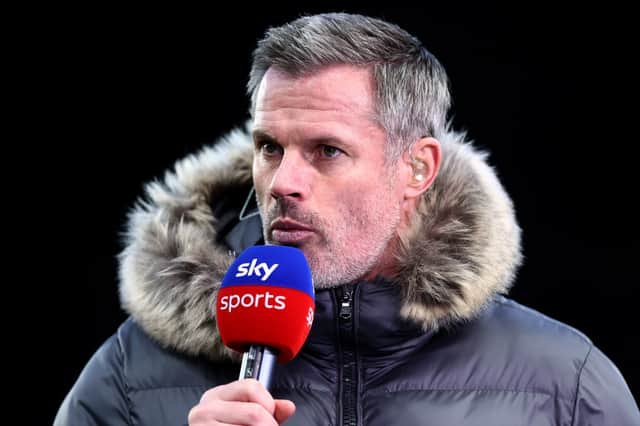
The comments at the heart of the furore weren’t especially clever. Carragher probably did owe an apology of some sort for the sheer crassness of his remarks, but nothing that he said was so dreadful as to be worth creating a media storm over. Such comments are made in pubs or on social media every day, and a roll of the eyes is usually quite sufficient as a response.
“There is a chain in football, whether you like it or not,” Carragher said on the Stick To Football podcast. “Real Madrid will take Manchester United’s best player. They did it with Ronaldo. And there will be teams below Aston Villa, and they’ll take their players or manager, so shut the f**k up, Aston Villa fans. Aston Villa will never be Manchester United.”
Unpleasant, certainly, and delivered with a targeted expletive that probably added a dash of offence for those inclined towards the puritanical. Carragher did nothing to further the conversation about Unai Emery’s future – the Aston Villa head coach has been suggested as a possible successor to Michael Carrick – and nothing he said was particularly big, clever, or witty.
Carragher admitted that his words were “clumsy” and “wrong” in his apology on social media, adding that they were intended to be “tongue in cheek.” Foot in mouth would be more accurate, and if he was trying to crack a joke then he definitely flubbed the punchline. But it’s hard to imagine that anything he said was libellous, not least because his comments fairly reflected the sad truth that football is indeed heavily stratified.
Manchester United have more money, more historical success and a bigger fanbase than Aston Villa, and as such are in a strong position to poach their best players or staff. It isn’t a controversial notion. They just did it with Youri Tielemans, for starters.
Not that it had to be true anyway. Fair opinion is protected under British libel laws. People are, in fact, permitted to say that they think Manchester United are bigger or better than Aston Villa. Nor is it illegal to tell people to “shut the f**k” up, even if it isn’t particularly polite.
Aston Villa’s threatened legal action seems spectacularly unlikely to have been successful. They would have needed to demonstrate in court that not only were Carragher’s comments untrue, but that they did not fall under the heading of fair opinion and that they also caused financial or reputational damage. They would need a very good lawyer indeed to complete that particular hat-trick.
Carragher may have been advised by one of his various employers to apologise in order to make it all go away, or he may have genuinely regretted his rudeness. But the danger that he would be successfully sued appears to have been minimal. So why did Aston Villa make their threats in the first place?
Aston Villa’s legal threats were troubling – and part of a broader pattern

On Friday evening, Aston Villa co-owner Nassef Sawiris – the most active member of the club’s ownership group in day-to-day operations – released a statement which was published on social media and stated that the club would “initiate legal action” against Carragher.
Denouncing Carragher’s “unacceptable insults about the club and its fans,” Sawiris added that “Aston Villa will not allow anyone to stop our ascension in English and European football.”
Assuming that Sawiris had spoken to his or the club’s legal staff about the possibility of legal action – The Athletic’s Aston Villa reporter suggested on Sunday that a reply had been discussed internally in some capacity before the statement was made, although 3 Added Minutes cannot verify that claim – then he presumably would have been aware that he would have a limited chance of success.
It may have been a rather aggressive attempt to control the narrative about Emery’s future as the possibility of his taking the Manchester United job is raised in the wider media, but it seems unlikely that anyone would believe that the Spaniard wouldn’t already have a pretty clear idea of Villa’s place in the broader footballing landscape, or their merits relative to United.
Perhaps it was designed to fire up (or rile up) the club’s supporters. Maybe the reply was just as clumsy and ill-considered as Carragher’s own remarks, a mark of genuine anger with the form of its expression not really thought through. But it’s hard not to wonder whether it might also have been an attempt to bully a pundit, and to control what the media might say through fiscal force.
There are plenty of pages in the playbook used by American president Donald Trump, and others cut from a similar cloth, which call for the use of legal threats to suppress criticism. It’s a form of bullying which has been used by the wealthy and powerful against those of lesser status for some time but which appears to have become especially common in the current political climate.
Only Sawiris can possibly know whether he was trying something of that ilk in order to silence a pundit whose opinion he disliked, but if the echo of such tactics were entirely accidental then it would surely be fitting that he, too, apologises for an escalation that was both needless and, most likely, groundless.
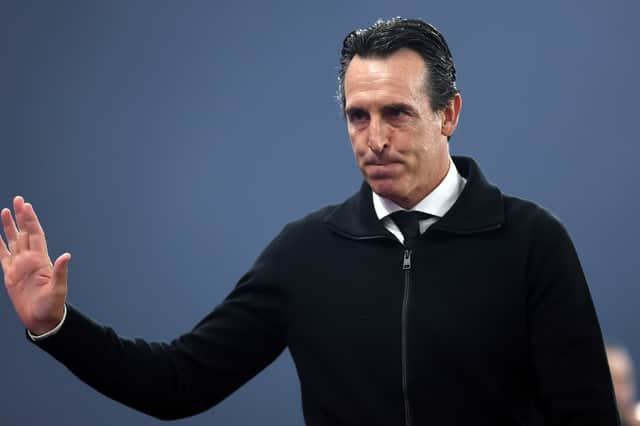
Had Sawiris stopped at condemning Carragher’s comments, there wouldn’t really be an issue to contend with. He is, after all, perfectly entitled to have been offended and frustrated by what were undeniably unpleasant remarks. But threatening legal action smelled of an attempt to suppress negative coverage.
Other clubs have already attempted to use strong-arm tactics to silence critics in the media. In 2025, Nottingham Forest told Gary Neville that he isn’t welcome at the City Ground, while Bolton Wanderers, Hull City and Blackburn Rovers are among clubs to have banned local journalists due to negative coverage in recent years. The idea is simple: Say the wrong things about us, and we’ll try to prevent you from covering our team. Be nice, and you’ll get access. For many journalists, especially at a regional level, that access is vital.
Sawiris may not have consciously intended to use controlling tactics against Carragher, of course. He may well just have been furious and not have contemplated the ramifications of the threat of legal action. But it surely isn’t asking too much of anyone not to threaten a lawsuit without considering the consequences. It isn’t asking too much to suggest that they do better.
If Aston Villa want the narrative to be about their success as a team, then the way to make that happen isn’t to threaten members of the media who denigrate them. It’s to keep winning, to keep overachieving as they have done for the past few seasons, until it’s impossible to put together a coherent argument against them.
And even then, there will be people who call their team rubbish, or over-rated, or this or that or the other. They do it with every club in the world, no matter how many trophies they might win. In fact, the bigger they are, the more criticism they’re bound to receive. Sometimes, people just have foolish opinions, and you have to accept that they have the right to hold and indeed broadcast them. And that includes Jamie Carragher.