
Everton are becoming painfully dull - the sorely needed changes are obvious

Everton are often dismissed as boring and don’t seem to be a threat to the top teams - what can set pulses racing on Merseyside again?
There doesn’t tend to be much analysis of David Moyes’ Everton these days. Perhaps that’s because they’re not close enough to either the top or bottom of the table to become a part of any particularly interesting storylines. Or perhaps it’s because we think we already know exactly who they are.
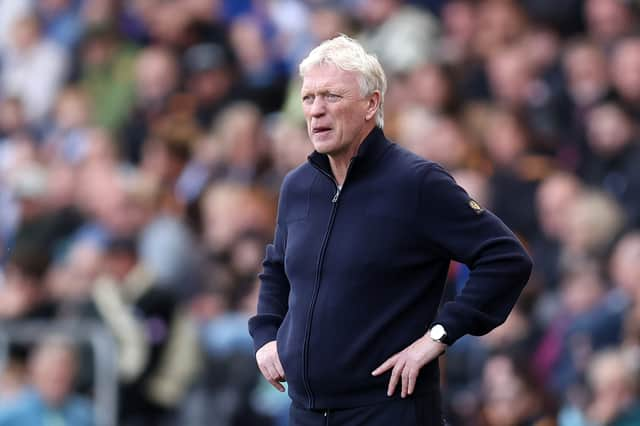

Everton, the consensus has it, are rock solid in defence but little more than a blunt instrument in attack. The result is lots of low-scoring games followed by safety without ever setting too many pulses racing. It’s a pervasive stereotype which the Premier League table does little to dismiss.
The sense is that Everton are going nowhere fast. Too tough to go down, too tame to trouble the top teams, too stodgy to thrill anyone along the way. In David Moyes, they have an older manager playing what’s perceived to be an old-fashioned brand of football. But is the narrative wholly fair – and what would it take for Everton to make real forward progress?
Why Everton are struggling to score - and whether David Moyes is to blame
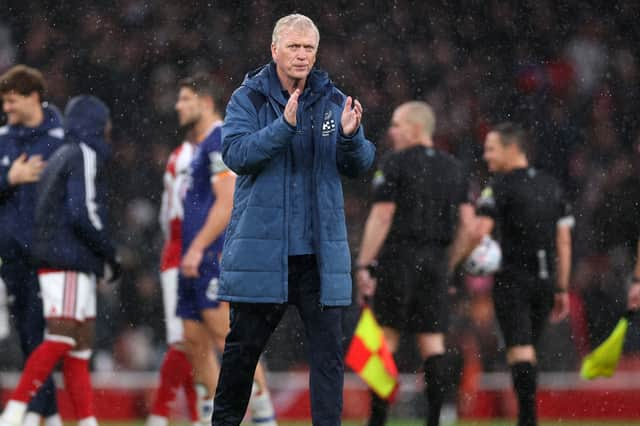
If David Moyes had any interest in changing perceptions around his team this season – and he probably didn’t – then he hasn’t made much headway so far. Only five teams had conceded fewer goals than Everton over the course of the first eight games, a testament to their resilience at the back. Only three had scored fewer, too.
The Toffees entered the weekend in mid-table, having failed to beat any of the Premier League’s traditional powerhouses while beating every one of the less wealthy or storied sides that they faced. The narrative has only been strengthened: Solid, reliable, redoubtable, dull.
On paper, not much has changed since last season. The squad hasn’t changed much. They still play the same relatively direct, relatively risk-averse style of football – roughly the same number of long passes and carries per game, roughly the same angles of attack, and roughly the same results.
It would probably help if they had anyone capable of scoring goals reliably. Thierno Barry, their only recognised senior striker, has three Premier League strikes to his name this season but his total number of expected goals – just north of five – represents almost exactly half of the team’s total. This is a side that’s become reliant on a forward who is by no means an efficient finisher and never has been.
Moyes came under a certain degree of pressure last season when results subsided towards the end of the campaign, and Everton didn’t finish all that far away from the relegation zone, but it’s hard to know precisely how he’s meant to get his team scoring more frequently when they lack players who are fundamentally capable of scoring goals frequently. This is a team whose potential is capped by a lack of both creative talent and quality in the opposing penalty area.
Even when they did finally get the goals flowing against Monday’s opponents Newcastle United in their EFL Cup match in midweek, it required luck as much as judgement - they won 3-1 but were outclassed for long periods and the visitors more than doubled the Toffees’ xG total, with 28 efforts on goal to Everton’s 11. It was just the third time in 2026 that they had scored more than two goals against Premier League opposition, and it’s hard to argue that it was entirely deserved.
Given his resources, admittedly, Moyes has arguably done just about as much as humanly possible. The defence, which does contain one or two genuinely high-quality players, is among the more difficult to break down in the top flight, although the fact that the xG they have allowed is firmly in midtable suggests that it might be slightly overrated, as did the quantity and quality of the chances they allowed on Thursday night.
The attack, meanwhile, which does not contain many high-end players at all, is among the league’s weakest. Moyes has failed to elevate the more mundane elements of his team, but he is getting a tune out of his better players.
Nor is he a coach whose playing style is quite as prehistoric as is sometimes suggested. Everton are a direct team to a degree, but are firmly in the middle of the pack when it comes to long balls attempted, for instance. This isn’t kick and rush. It’s just what football looks like when played by a technically-limited squad.
Barry’s struggles in front of goal - in the Premier League, at least - also bely the fact that Everton are actually getting the ball forward reasonably efficiently. The Frenchman’s 3.4 shots per goal is the second-worst ratio in the top flight (behind, somewhat oddly, Erling Haaland) which is a testament to his flaws but also to the number of times he’s getting shooting chances in the first place. Everton’s 82 key passes – passes which lead directly to a shot - is in the top half of the league.
In short, while Everton may not ooze verve and creativity and while they certainly don’t score enough, Moyes’ system is getting the ball into the opposing box often enough for them to score more. It’s worth noting that Chelsea have an almost identical total team xG to Everton (10.06 to 10.33) but have scored more than twice as many actual goals.
Chelsea are viewed as a fluent, aggressive attacking team, and Everton as dreary and without cutting edge, but the stats suggest that they’re creating just as much as each other. The difference is that Chelsea have João Pedro, Cole Palmer and Morgan Rogers, and Everton have Thierno Barry.
New owners are coming – and Everton sorely need change
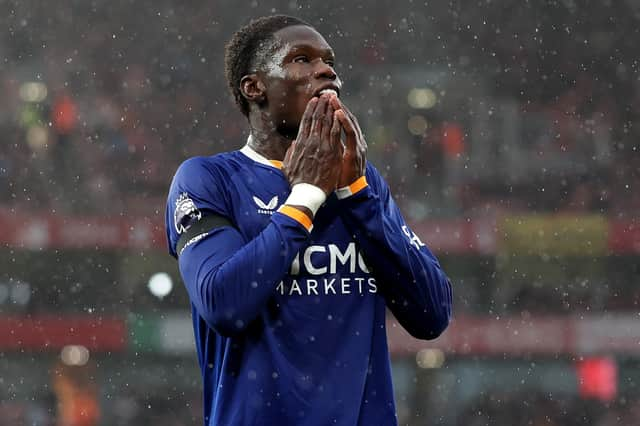
Without wishing to pile on the unfortunate Barry excessively – he isn’t the only player missing chances, after all, and has been atypically accurate during the EFL Cup run, in which he has already scored four times – you don’t have to squint too hard to see a team that could be far more threatening if they get the right kind of investment.
They didn’t get it from The Friedkin Group, who are exploring the sale of the club just two years after taking the reins from the justly maligned Farhad Moshiri. Everton actually earned more from player sales than they spent this summer, and failed to sign a single striker at the same time that they lost Iliman Ndiaye and Beto.
That wasn’t entirely deliberate – a deal to sign Folarin Balogun was among several which fell through at the very end of the transfer window – but it still spoke to a lack of desire to spend from the owners. They were only prepared to loosen the purse strings once Ndiaye was gone and the coffers were full, and then they made a mess of it.
So what needs to change for Everton to take a noticeable step forward towards the top half of the table and perhaps to European qualification? They need new owners who will spend and who will furnish Moyes with the attacking players he needs. The pressure on the manager, which has at least eased after a solid start to the season, is something of a red herring. You can critique the excitement inherent to his system, but it’s fair to say that the Scotsman simply hasn’t been given the tools to do a much more convincing job.
It’s not clear when new owners might emerge. Rumours linking American billionaire Michael Dell with a bid have been personally dismissed by the 61-year-old. The Friedkin Group are seemingly keen to do a deal before the end of the 2026/27 season, but there are no guarantees.
Everton are indeed a team in stasis, because it’s been so long since they’ve had both owners willing to invest significantly in the playing squad and a recruitment team which can find the right players to buy at the same time. Given that lack of investment, the fact that Everton have never been relegated or even come all that close in the last few seasons is perhaps more impressive than is widely appreciated.
Are Everton dull? Sure, a bit, although perhaps not to the extent that might be suggested. Do they tend towards low-scoring games? Absolutely. Are they going anywhere fast? No. But maybe that will change with the next chairman, if they’re willing to reach into their pockets to buy a forward or two.
Everton head into Monday night’s ’return leg’ against Newcastle United as a team who are simply putting one foot in front of the other, and there isn’t much more that can be asked of them, or their manager, for as long as they’re being run by the Friedkid Group. And at least when change does come in the boardroom, they have a remarkably solid and stable base to rebuild upon.
Few teams who have suffered from chronic underinvestment are this competent. For Everton fans, it’s just a matter of being patient and waiting for change. And patience is something that Everton fans have become pretty good at in the 31 years since their last trophy.