
Mauricio Pochettino will probably fail as Manchester United manager - but it won't be his fault

Manchester United are set to sack Michael Carrick and appoint Maurico Pochettino in his place - and the evidence suggests that we’ll be back here again before long.
According to Brave New World, Guillaume Balague’s excellent account of Maurico Pochettino’s managerial methodology at Tottenham Hotspur, the Argentine likes to place a bowl of lemons in his office, believing that they absorb negative energy from the room. One wonders whether there are enough lemons in the world to do the job at Old Trafford.
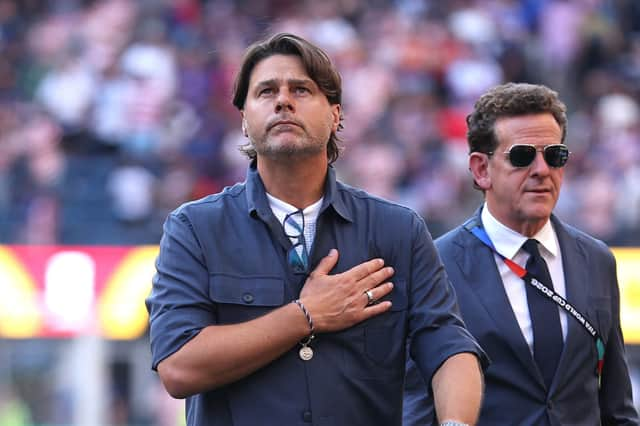

According to BBC Sport, the 54-year-old is preparing to accept an offer to replace Michael Carrick as head coach of Manchester United. Carrick is expected to be relieved of his duties after overseeing the club’s worst start to a season since 1986, and Pochettino – so often linked with the job before – seems set to be poached from the United States men’s team at considerable expense.
Will the eighth permanent manager since Sir Alex Ferguson finally set Manchester United straight? Is one of football’s most affable figures capable of dispelling such deep-set doom and gloom? Probably not – but it wouldn’t be his fault.
Is Mauricio Pochettino the right manager for Manchester United?
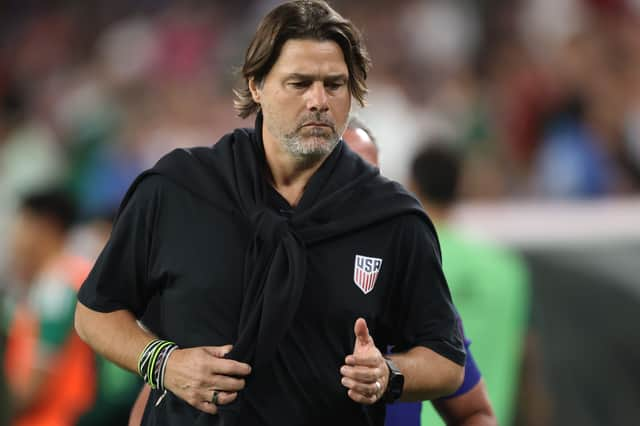
Pochettino’s reputation still rests primarily on his achievements with Spurs, seven years after he was controversially – wrongly – sacked by Daniel Levy.
Those who didn’t develop a taste for that Tottenham team have often pilloried Pochettino for his failure to win any trophies during a tenure which lasted for over five years, but he took also-rans and turned them into a member of the Premier League’s new-fangled ‘big six.’ They were also consistently the most thrilling team to watch at the top end of the table. He never could get Spurs over the line, but he overachieved relative to initial expectations.
Since leaving North London, however, Pochettino hasn’t had much joy – and there is plenty of evidence that he might find Manchester United to be rather difficult to manage.
The limited size of his silverware collection (two minimum-standard trophies in France with PSG) might be the punchline to most of the jokes, but given how far United are from fussing about medals right now, that isn’t really a cause for immediate concern. More worrying is his track record at grossly mismanaged football teams.
He took over PSG when they were signing superstars with little regard for the concept of a cohesive squad, and couldn’t get a tune out of them. He took control of Chelsea in 2023 and did a reasonable job with a collection of players seemingly signed at random, but got the chop when he narrowly missed out on European football and got into a fight with the owners over the sale of Conor Gallagher.
Since Pochettino left Spurs, he has only taken charge of two wealthy basket case clubs and the USMNT. He seemed to take to international management pretty well, but only two of those jobs bear any resemblance to Manchester United under the Glazers and Ineos. They didn’t last very long or end very well.
Pochettino is exceptionally likeable, charismatic, and under the right circumstances is almost certainly an excellent manager. Based on what we’ve seen over the past seven years, however, he isn’t the kind of coach who can crack heads together or turn charcoal into diamonds.
What he seems to need is the time and patience to construct a squad which buys into his methods and personality, and which suits his high-intensity, high-speed style of play. Manchester United, meanwhile, are a club with an incoherent recruitment strategy and no more patience left to burn.
Why Manchester United’s struggles are their own fault
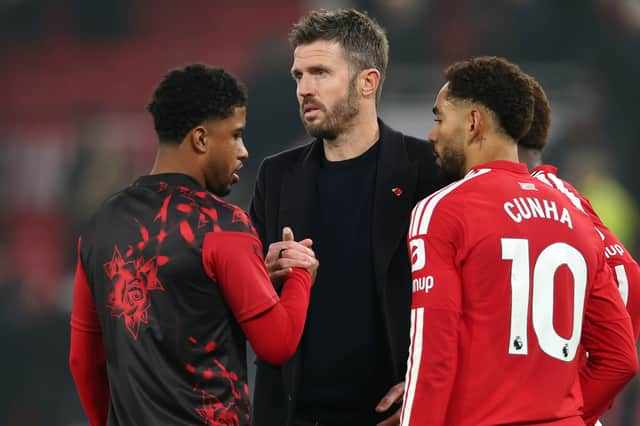
An explanation of Manchester United’s current predicament shouldn’t exclude the mistakes made by Michael Carrick simply because there is more blame to attribute to people further up the corporate ladder – their outgoing head coach was tactically inflexible and unimaginative, and couldn’t concoct a Plan B when everything started going south after the summer.
That tallies with his stint as Middlesbrough manager, when better managers were often able to exploit his systemic rigidity and inability to adapt. Carrick, like Pochettino, is so likeable and pleasant to the media that he sometimes gets an easier ride than he might deserve – but he is, ultimately, one of the reasons that one of the Premier League’s richest teams are stuck in the relegation zone.
Pochettino is a sharper strategic thinker than Carrick. He isn’t necessarily possessed of one of the very best tactical minds in the game, but he will come up with creative solutions to on-field problems and won’t get out-thought too frequently. In that regard, at least, he is likely to represent an improvement on his predecessor.
He is also an excellent motivator, so long as the squad doesn’t have too much ego about it. At Spurs he wasn’t just respected by the dressing room, but genuinely loved. Few Premier League coaches have inspired so much loyalty in their squad before or since. United could use that quality, given that the team so often seems to end up at each other’s throats.
The most immediate problem with appointing Pochettino is that he also likes to play a hard-pressing, fast-paced brand of football which demands immense athleticism. United, as it happens, have one of the league’s less athletically-gifted squads. It simply wasn’t built to Pochettino’s specifications. Come to that, it doesn’t seem to have been built to any specifications whatsoever.
Take the long-awaited rebuild of the midfield which took place this summer. They spent big on Carlos Baleba despite his worrying injury history and the fact that he had just endured an abysmal season at Brighton. They may have spent twice as much on the unproven Andrey Santos as Chelsea valued him at. Youri Tielemans was reasonably priced, but it’s unclear what role he was signed for when he is neither a holding midfielder nor a box-to-box man and Bruno Fernandes already had the number 10 role on lockdown.
In short, the way Jason Wilcox and his recruitment team spent this summer was utterly illogical. Baleba has barely played, Tielemans looks like a square peg in search of a square hole, and Santos has been indifferent. All thoroughly predictable, and all thoroughly unhelpful for both Carrick and his successor.
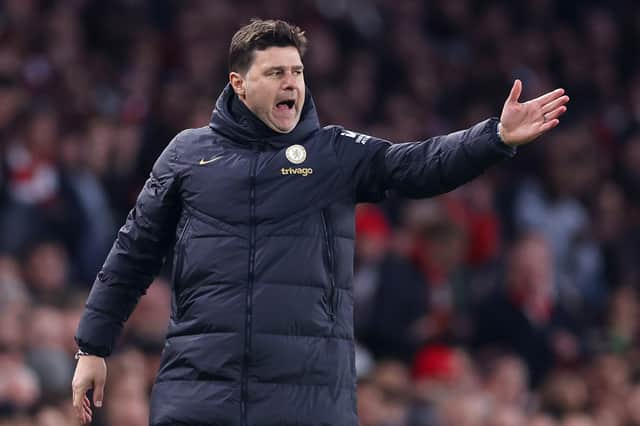
At Spurs, Pochettino was given enough control over transfers (and was surrounded by enough patient and likeminded people in positions of power) to slowly reshape the squad in his own image, and they bought exceptionally well. United have done the opposite for some years now, and the squad seems neither well suited to their likely new manager nor, in truth, to any other manager they could have appointed.
Manchester United are an ill-managed mess with a squad which is simultaneously hugely expensive and bizarrely thin in several key positions. The only way that Pochettino can be expected to succeed, based on his career to date, is to be given time to fail early on and the opportunity to influence squad-building over time. In short, he needs a combination of grace and adjacency to competence that he seems unlikely to get.
As such, Pochettino will probably fail at Old Trafford. Eddie Howe would probably fail, too, as would Julian Nagelsmann, Fabian Hürzeler, Didier Deschamps and every other coach they reportedly considered for the job before settling on the Argentine. The cycle of struggles they have consigned themselves to is a consequence of persistent mismanagement at the highest level by owners who know how to turn money into even more money but could scarcely be less capable of successfully managing a sports club. Good luck, Mauricio.